Friday, February 3, 2017

The digital experiences you love and the organizations you trust most. The software(drupal) they depend on.

Drupal is content management software. It's used to make many of the websites and applications you use every day. Drupal has great standard features, like easy content authoring, reliable performance, and excellent security. But what sets it apart is its flexibility; modularity is one of its core principles. Its tools help you build the versatile, structured content that dynamic web experiences need.

It's also a great choice for creating integrated digital frameworks. You can extend it with any one, or many, of thousands of add-ons. Modules expand Drupal's functionality. Themes let you customize your content's presentation. Distributions are packaged Drupal bundles you can use as starter-kits. Mix and match these components to enhance Drupal's core abilities. Or, integrate Drupal with external services and other applications in your infrastructure. No other content management software is this powerful and scalable.

The Drupal project is open source software. Anyone can download, use, work on, and share it with others.

Drupal's the content management system behind many of the digital experiences you love. And it will always be free.

Thursday, August 14, 2014

Infants much smarter than you may think!

Does a baby know that a dog can jump a fence while a school bus cannot or a cat can avoid colliding with a wall while a table being pushed into a wall cannot?

According to an interesting study, infants as young as 10-months old can tell the difference between the kinds of paths naturally taken by a walking animal, compared to a moving car or piece of furniture.

"You can understand something about what babies know based on how long they look at something. Babies will look at something new longer than they will look at something that is already familiar to them," explained Rachel Baker from Concordia University's department of psychology.

This is important because the ability to categorise things as animate beings or inanimate objects is a fundamental cognitive ability that allows toddlers to better understand the world around them, added fellow researcher Tamara Pettigrew.

To understand this, researchers looked at about 350 babies - who participated at 10, 12, 16 and 20 months - to find out when children clue in to the fact that animals and objects follow different motion paths.Researchers used a technique called the "visual habituation paradigm" that measures how long one looks at a given object.

Since computer animations of a bus or a table jumping over a wall held the attention of infants for longer than a bus or table bumping into a wall, it indicated the former was newer to them than the latter.

In contrast, infants' attention was held just as well by a cat jumping over a wall as by a cat rebounding after running into a wall, indicating that infants think that cats can both jump and rebound.

"Animals do bump into objects. The bigger picture is that the motion of objects is more predictable than the motion of animals. This research shows that even 10-month-old babies have some understanding of this," Baker noted.

The study reveals that even the youngest among us absorb more details than some might think through eyes that are usually open wider than adult ones.

The findings were shared in the journal Infant Behavior & Development.

Cell phones charging using sound is possible now!!!

Cell phones charging using sound is possible now. This may seem impossible to many people, but it can be true.

If you have a cell phone then chances are that you are always worried about charging it. And things become a bit difficult when you are on a journey. The first thing that comes to our mind when the battery of the cell phone goes low is to find some power point.

But it appears that all this could be past soon. Now sound can be used to charge cell phones. Traffic noise, music, chants from a football could be very helpful to you in charging your phone.

Moreover, even your own voice could be used to charge your cell phone. That is wonderful indeed. This is only shows that the advancement in technology is going to change a lot the way we live in these days.

This has been confirmed by scientists from Queen Mary University of London and Nokia. It has been reported that these scientists have created an energy-harvesting prototype (a nanogenerator) to accomplish the task of charging a cell phone using everyday background noise.

Dr Joe Briscoe from QMUL’s School of Engineering and Materials Science said: “Being able to keep mobile devices working for longer, or do away with batteries completely by tapping into the stray energy that is all around us is an exciting concept.”

Wednesday, August 13, 2014

First time women won 'noble prize for maths'!!im proud to me a women!!!....

South Korean President Park Geun-hye, sixth from left, poses with award winners during the opening ceremony of the 2014 International Congress of Mathematicians in Seoul on Tuesday. Iranian mathematics professor Maryam Mirzakhani, sixth from right, is the first female winner of the Fields Medal. (Yonhap News Agency via European Pressphoto Agency).
 

Although Albert Einstein praised another as “the most significant creative mathematical genius thus far produced since the higher education of women began” after her death in the ’30s, she couldn’t get a teaching job. When she finally did, the Nazis took it away because she was Jewish.

The struggles of female mathematicians Hypatia (killed in the 5th century), Sophie Germain (1776–1831) and Emmy Noether (1882–1935) are now history. However, not until Tuesday did a woman win the Fields Medal — “the Nobel of math,” as Time magazine put it — first awarded in 1936.

The achievement of Stanford University professor Maryam Mirzakhani is not just unprecedented, but unlikely in a field where women remain underrepresented. As few as 9 percent of tenure-track positions in math are held by women, according to a 2010 study.

“This is a great honor. I will be happy if it encourages young female scientists and mathematicians,” Mirzakhani said in a Stanford University press release. “I am sure there will be many more women winning this kind of award in coming years.”

A native of Iran, Mirzakhani studies “geometry and dynamical systems, particularly in understanding the symmetry of curved surfaces, such as spheres, the surfaces of doughnuts and of hyperbolic objects,” as Stanford phrased it.

What this means for people who couldn’t hack trigonometry: Her work may help engineers and cryptographers.

And she’s not working on any single problem.

“I don’t have any particular recipe,” Mirzakhani said. “It is the reason why doing research is challenging as well as attractive. It is like being lost in a jungle and trying to use all the knowledge that you can gather to come up with some new tricks, and with some luck you might find a way out.”

Wednesday, April 2, 2014

Did you know about the most complicated organ of human body?


The human brain is the most complex organ in the human body and probably the most complex creation present on this universe. It is evident that, the world’s greatest man made wonders are a result of the human brain making it the most amazing feature in a human being. The human brain with its complexity acts like a storage device which holds safely a person’s most cherished memories. A person’s personality is by far influenced by the brain as well as generation of human consciousness which gives a person passion, motion and emotion. A command center for the central nervous system, the brain serves human beings with ample physical and cognitive abilities. This are just a few vital roles that the human brain performs but the most amazing thing about the human brain are the many facts that are less known by many people with a fully functional brain.

1 – The human brain is the only organ in the human body that lacks nerves despite the fact that it acts as the central command for the central nervous system. This simply implies that, the human brain feels no pain.

2 – The human brain consumes the largest portion of the total energy that is generated in the human body. To be precise, the brain consumes 20% of that energy despite the fact that it only represents only 2% of the total body weight. The energy is vital for maintaining healthy brain cells and fueling nerve impulses.

3 -The number of neurons present in the brain is approximately 100 billion which is about 15 times of the total human population on earth. This high number of neurons increases the processing ability of the brain.

4 – The human brain is regarded as the fattest organ in the human body. About 60% of the human brain is comprised of fat which is the highest concentration of fat that is present in a single organ in a healthy human being. Furthermore, 75% of the total brain mass is comprised of water which regulates various functions in the brain.

5 – The neocortex is the portion of the human brain that is responsible for language and consciousness. It makes up approximately 76% of the human brain and making it the largest when compared to that in other animals.

6 – It is believed by many that, human beings use less than 10% of their brain. This is a misconception because each and every part of the brain has a known function.

7 – During early pregnancy, neurons have shown to multiply at a rate of 250,000 neurons per minute

8 – About 15-20% (750ml) of the total cardiac output is directed to the brain every minute.

9 – The energy consumed by the brain which is approximately 25 watts is sufficient enough to illuminate a light bulb.

10 – The human brain is not as perfect as it is thought of since in many instances it has been found to fool human beings making them to perceive things differently from the reality.

There can be little doubt, the human brain is truly an incredible body organ that requires maximum care to keep vital body processes running.

Tuesday, April 1, 2014

British Scientists Supposedly Cloned a Dinosaur — Here's What Really Happened!


Scientists at the University of Florida have successfully cloned a dinosaur, a spokesman from the university said yesterday.

The dinosaur, a baby Apatosaurus nicknamed “Spot,” is currently being incubated at the University of Florida’s College of Veterinary Medicine.

The scientists extracted DNA from preserved Apatosaurus fossils, which were on display at the university’s museum of natural science. Once the DNA was harvested, scientists injected it into a fertile ostrich womb.

“Ostriches share a lot of genetic traits with dinosaurs,” said Dr. Norman Trudell, a biology professor at UF and the project’s leading scientist. “Their eggshell microstructures are almost identical to those of the Apatosaurus. That’s why the cloning worked so perfectly.”

The scientists extracted DNA from preserved Apatosaurus fossils, which were on display at the university's museum of natural science. Once the DNA was harvested, scientists injected it into a fertile ostrich womb.

"Ostriches share a lot of genetic traits with dinosaurs," said Dr. Gerrard Jones, a biology professor at LJMU and the project's leading scientist. "Their eggshell microstructures are almost identical to those of the Apatosaurus. That's why the cloning worked so perfectly."

Those in the scientific community say the dinosaur cloning – the first ever of its kind – is a milestone for genetic engineering.

"I used to think this kind of thing could only happen in the movies," said Dr. Gemma Sheridan, a LJMU chemistry professor. "But we're making it happen right here in our lab. It's astounding."

Saturday, June 29, 2013

Confederations Cup: Brazil's Neymar ready for historic Maracana tussle with Spain!


Brazilian star Neymar vowed on Friday to help fire Brazil to a third straight Confederations Cup title at the expense of world champions Spain to show fans they can expect fireworks when he arrives in La Liga with Barcelona.

"We will be playing for our families, our friends, but above all for the Brazilian nation.

"We are ready for what will be an historic match," the 21-year-old starlet said as he looked forward to a mouthwatering encounter with the Spanish on Sunday in Rio's Maracana stadium.

"We shall be defending our country," added Neymar, who scored in all three group games before helping to create goals for Fred and Paulinho in the semi-final success over Uruguay.

"It will be a great match. Both teams are out to create history," added Neymar, noting that while Brazil are gearing up for an even bigger prize next year when they host the World Cup for the first time since 1950, landing Spain's scalp on Sunday would send out a message that a new Selecao has landed.

Spain, who have never won the Confederations event, will go into action on the back of a record 29 matches unbeaten and seeking an unprecedented fourth consecutive victory in a major tournament after Euro 2008 and 2012 triumphs sandwiched their maiden World Cup success in 2010.

Brazil meanwhile came into the tournament having dumped former coach Mano Manezes for 2002 World Cup-winning handler Luiz Felipe Scolari, despite the latter enduring some less than stellar recent spells in club football with Chelsea and Palmeiras.

Since Scolari's return, the auriverde have slowly begun to shape a team based on a blend of youthful exuberance encapsulated by the likes of Neymar himself and the experience of older players such as Fred, whose three goals, following a run of five in six friendlies, have fired up the new machine.

"This will be a real final showcasing great players. It should be a great game and I just hope I come off happy and a champion with my team," said Neymar, who added he was not afraid of the close attention the Spanish defence will undoubtedly seek to shackle him with.

"I will just go out there and do what I always do to help my team - take free kicks, spray passes around, score goals. I want to help the team."

Brazil are desperate to showcase the giant nation at this event as well as the World Cup, amid an ongoing battle to revamp sagging infrastructure and sometimes chaotic public services.

Since before the event started on June 15, more than 1.5 million Brazilians have been out in the streets in more than 100 cities protesting at the vast bill of some 15 billion dollars to host the two football jamborees, angry that the government has put money into that rather than health, education and transport.

A recent poll indicated two-thirds of citizens back the World Cup but the protests have continued and President Dilma Rousseff has been forced to promise wide-ranging institutional reform.

In allusion to the protests, Neymar said that just as the pressure was on the team to win trophies so it was on the government to improve the country's lot.

"The people know the importance of what is happening in Brazil and we are pleased if we can bring joy to the many who are not happy. Of course we all back the protests - as long as they are peaceful, without violence or vandalism.

Eating fish can lower breast cancer risk!

 
A new study has found that fatty acids found in fish are associated with lower risk of breast cancer.The results show that each 0.1 g per day or 0.1 percent energy per day increment of intake of n-3 polyunsaturated fatty acid derived from fish was associated with a 5 percent reduction in risk.

To achieve this risk reduction, intake of oily fish such as salmon, tuna or sardines should be 1-2 portions per person per week.Breast cancer is one of the most common cancers, accounting for 23 percent of total cancer cases and 14 percent of cancer deaths in 2008.

Studies suggest that a healthy diet and lifestyle is crucial for the prevention of breast cancer, and dietary fat is one of the most intensively studied dietary factors closely related with risk.

The fatty acid found in fish is involved in chemical messaging in the brain, helping to regulate blood vessel activity and areas of the immune system.Marine n-3 polyunsaturated fatty acid was associated with a 14 percent reduction of breast cancer between the highest and lowest category of the fatty acid intake.

The risk was lowest in Asian populations, probably because fish intake is much higher in Asia than in western countries, the authors said.
A new study has found that fatty acids found in fish are associated with lower risk of breast cancer.
The results show that each 0.1 g per day or 0.1 percent energy per day increment of intake of n-3 polyunsaturated fatty acid derived from fish was associated with a 5 percent reduction in risk.
To achieve this risk reduction, intake of oily fish such as salmon, tuna or sardines should be 1-2 portions per person per week.
Breast cancer is one of the most common cancers, accounting for 23 percent of total cancer cases and 14 percent of cancer deaths in 2008.
Studies suggest that a healthy diet and lifestyle is crucial for the prevention of breast cancer, and dietary fat is one of the most intensively studied dietary factors closely related with risk.
The fatty acid found in fish is involved in chemical messaging in the brain, helping to regulate blood vessel activity and areas of the immune system.
Marine n-3 polyunsaturated fatty acid was associated with a 14 percent reduction of breast cancer between the highest and lowest category of the fatty acid intake.
The risk was lowest in Asian populations, probably because fish intake is much higher in Asia than in western countries, the authors said.
- See more at: http://post.jagran.com/eating-fish-can-lower-breast-1372478016#sthash.VzsJK5im.dpuf
A new study has found that fatty acids found in fish are associated with lower risk of breast cancer.
The results show that each 0.1 g per day or 0.1 percent energy per day increment of intake of n-3 polyunsaturated fatty acid derived from fish was associated with a 5 percent reduction in risk.
To achieve this risk reduction, intake of oily fish such as salmon, tuna or sardines should be 1-2 portions per person per week.
Breast cancer is one of the most common cancers, accounting for 23 percent of total cancer cases and 14 percent of cancer deaths in 2008.
Studies suggest that a healthy diet and lifestyle is crucial for the prevention of breast cancer, and dietary fat is one of the most intensively studied dietary factors closely related with risk.
The fatty acid found in fish is involved in chemical messaging in the brain, helping to regulate blood vessel activity and areas of the immune system.
Marine n-3 polyunsaturated fatty acid was associated with a 14 percent reduction of breast cancer between the highest and lowest category of the fatty acid intake.
The risk was lowest in Asian populations, probably because fish intake is much higher in Asia than in western countries, the authors said.
- See more at: http://post.jagran.com/eating-fish-can-lower-breast-1372478016#sthash.VzsJK5im.dpuf
A new study has found that fatty acids found in fish are associated with lower risk of breast cancer.
The results show that each 0.1 g per day or 0.1 percent energy per day increment of intake of n-3 polyunsaturated fatty acid derived from fish was associated with a 5 percent reduction in risk.
To achieve this risk reduction, intake of oily fish such as salmon, tuna or sardines should be 1-2 portions per person per week.
Breast cancer is one of the most common cancers, accounting for 23 percent of total cancer cases and 14 percent of cancer deaths in 2008.
Studies suggest that a healthy diet and lifestyle is crucial for the prevention of breast cancer, and dietary fat is one of the most intensively studied dietary factors closely related with risk.
The fatty acid found in fish is involved in chemical messaging in the brain, helping to regulate blood vessel activity and areas of the immune system.
Marine n-3 polyunsaturated fatty acid was associated with a 14 percent reduction of breast cancer between the highest and lowest category of the fatty acid intake.
The risk was lowest in Asian populations, probably because fish intake is much higher in Asia than in western countries, the authors said.
- See more at: http://post.jagran.com/eating-fish-can-lower-breast-1372478016#sthash.VzsJK5im.dpuf

Tuesday, June 25, 2013

Massive Coronal Hole on the Sun!........


NASA’s Solar Dynamics Observatory captured this picture of the sun on June 18, 2013, showing a huge coronal hole – seen here in dark blue -- spread out over almost the entire upper left quadrant of the sun. A coronal hole is an area of the sun’s atmosphere, the corona, where the magnetic field opens up and the material flows quickly out. This results in a cooler and less dense atmosphere than the surrounding areas. This coronal hole is at least 400,000 miles across, which is more than 50 Earths side by side. Coronal holes spew out fast solar wind, probably traveling at about 400-500 miles per second. This is roughly twice the speed of the normal solar wind, the solar material that is constantly streaming off the sun in every direction to fill the solar system.

Coronal holes were first spotted by NASA’s Skylab in the early 1970s. Scientists now know that their size and number varies in concert with the sun’s solar cycle, which reaches a maximum of activity approximately every 11 years. Every time the sun heads toward that maximum, currently expected for late 2013 or early 2014, the coronal holes move closer and closer to the sun’s poles.

This image of the sun from June 18, 2013, shows a coronal hole – that is, an area of cooler, less dense material in the sun’s atmosphere, the corona -- in the upper left side, represented in blue. In this image from NASA’s Solar Dynamics Observatory, the blue color represents light in the 171 Angstrom wavelength, which shows the coolest material present in the image. Two other wavelengths of light are also shown in the picture: 211 Angstroms, in red, and 193 Angstroms in brown. Credit: NASA/SDO.

Brazilian man gets a dog face by plastic surgery!!!!!!!!


A man is so smitten by good looks of dogs that he has decided to go for plastic surgery to make him lookalike a dog.The Brazilian man offered an unknown sum of money to doctors to transplant his face with the dog's face.The doctor transplanted man's facial features, like ear, nose, lips and eyebrows with parts obtained from severed head of a dead dog.The man is being called as man-dog after he went for the weird surgery.

Tuesday, April 23, 2013

Did you know?: Early flying dinosaur hunted slippery fish!

Prior to this, paleontologists believed microraptors, which were about the size of a modern day hawk, lived in trees where they preyed exclusively on small birds and mammals about the size of squirrels.

Representational picture
Microraptor, a small flying dinosaur was a complete hunter, able to swoop down and pickup fish as well as its previously known prey of birds and tree dwelling mammals, a University of Alberta led research has revealed.
U of A paleontology graduate student Scott Persons said that new evidence of Microrpator`s hunting ability came from fossilized remains in China.

“We were very fortunate that this Microraptor was found in volcanic ash and its stomach content of fish was easily identified,” he stated.
Prior to this, paleontologists believed microraptors, which were about the size of a modern day hawk, lived in trees where they preyed exclusively on small birds and mammals about the size of squirrels.

“Now we know that Microraptor operated in varied terrain and had a varied diet. It took advantage of a variety of prey in the wet, forested environment that was China during the early Cretaceous period, 120 million years ago,” said Persons.

Further analysis of the fossil revealed that its teeth were adapted to catching slippery, wiggling prey like fish. Dinosaur researchers have established that most meat eaters had teeth with serrations on both sides that like a steak knife helped the predator saw through meat.
But the Microraptor`s teeth are serrated on just one side and its teeth are angled forwards.“Microraptor seems adapted to impale fish on its teeth. With reduced serrations the prey wouldn`t tear itself apart while it struggled,” said Persons.

“Microraptor could simply raise its head back, the fish would slip off the teeth and be swallowed whole, no fuss no muss,” he added.Persons likens the Microraptor`s wing configuration to a bi-plane. “It had long feathers on its forearms, hind legs and tail. It was capable of short, controlled flights,” he said
This is the first evidence of a flying raptor, a member of the Dromaeosaur family of dinosaurs to successfully prey on fish.

Rajnikanth in brand new avatar in 'Kochadaiyaan'!

The initial posters of the upcoming Tamil film Kochadaiyaan has just been released and it comes with a welcome surprise for the millions of fans of the southern superstar Rajnikanth. He is trying a classic literary story for the first time and here he will be seen in a much awaited double role, playing the part of both the father and the son. The new look of the superstar was revealed in an exclusive posted by movie critic and trade analyst Taran Aadarsh who tweeted “Xclusive pic from Kochadaiyaan”.

This Tamil period drama has been written by ace director KS Ravikumar and is directed by Soundarya Ashwin, the daughter of Rajnikanth. In a recent media event, Ravikumar was all praises about the upcoming film. He said, “I and Rajini like the movie very much. Soundarya has done a fabulous job in direction. There is a lot of strain involved in post production, and all efforts have paid us off very well." While he has claimed responsibility for story, direction, screenplay and supervision, the kudos for the extraordinary special effects go to Soundarya. According to rumors, the state of the art motion capture technology has been used to create the special effects.

The plot of the story revolves round a father son duo. The father is named Kochadaiyaan. He is a brave and resourceful lieutenant who is also a close confidante of a local ruler. His son is Rana who is actually more powerful than his father, but his wild energy needs to be tamed by the father. The dynamics between the two consist of a large part of the story, though it is Kochadaiyaan who dominates the story. Actress dancer Shobhana plays opposite Rajnikanth as the father while rumors that Deepika Padukone will be seen opposite the superstar as the son has now been confirmed. Apart from these, Jackie Shroff, R Sarathkumar, Rukmini Vijaykumar and Nassar will also be appearing in the film. The music has been composed by A R Rahman.

The film has highlighted the great acting capabilities as well as the artistic performance of Rajnikanth. Daughter Soundarya thinks that this is the best movie of the superstar’s career. Ravikumar has added in support of her, "The film has come out really well. It is prone to be a crowd favorite. I am sure that everyone will watch it more than just one time."

China realises India's maritime, aerospace capabilities: Lora Saalman!

China is fully aware about India's maritime and aerospace capabilities and is also monitoring the Indo-US relations albeit with a certain amount of "suspicion", an expert on Sino-India relations said here.

"China realises and recognises that India has made advances and has indigenous capabilities in maritime and aerospace arena," said Lora Saalman, associate, Nuclear Policy Programme at the Carnegie-Tsinghua Centre for Global Policy in Beijing.

Saalman was delivering a talk on 'Fractured Mirrors: Chinese Views of India Deterrence' at the Administrative Staff College of India here last evening organised by the US Consulate General Hyderabad.

She said Chinese are closely looking at the US-Indo relationship, adding "There is an argument on a side in China that India's relationship with US allows it to maintain a smaller (nuclear) arsenal."

"The focus has been on India-US relations in the last one decade (after the visit of Clinton and lifting of US sanctions on India). This kind of movement for greater engagement between the two countries (India-US) has been seen with certain amount of suspicion within China on what is the US and India's intention behind this," she said.

"When it comes to views on India's nuclear deterrence, domestic discourse (in China) becomes more fractious. A survey of Chinese sources uncovers over ten terms used to describe India's deterrence posture that reflect three primary shifts from defensive to offensive, regional to global and denial to control," she added.

Sunday, April 7, 2013

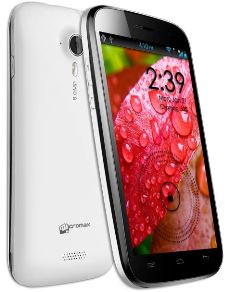
Tradus.com offers best price of Rs. 16,399 for Micromax A116 Canvas HD

 The e-commerce portals in India are offering huge discounts on Micromax’s flagship phone A 116 Canvas HD Android smartphone.

E-commerce portal ‘tradus.com’ is offering a discount of almost 14% on this model of Micromax. Tradus.com is selling it at Rs. 16,399 as special offer whereas the manufacturer’s present MRP is 19,000.
The portal is offering free shipping, cash on delivery, original bill, manufactures warranty and 0% EMI options as well. The delivery time mentioned by the portal is up to 3 to 5 working days.

Micromax A116 HD sports a 5 inch HD IPS capacitive display running on Android 4.1 Jelly Bean OS. The mobile is powered by 1.2 GHz Quad core MediaTek processor and an 8 megapixels camera with Auto focus and LED flash and also 2 megapixels front camera.

As the trend in e-commerce is, other portals are also offering around 10% to 12 % discount on this model. It is available on many e-commerce portal and is achieving good success.

Wednesday, October 3, 2012

Energyboostersblog: 'Little Angels' Korean Dancers!

Energyboostersblog: 'Little Angels' Korean Dancers!: A member of the 'Little Angels', a Korean folk ballet group formed in 1962, performs in New Delhi on Tuesday.Conceptualized ...

Apple plans to set up its own stores in India if Govt eases local sourcing norms!

Apple Inc, the maker of iPhones and iPads, is evaluating the possibility of setting up its own stores in India, if the Indian government eases local sourcing conditions, said two senior executives who have business relations with the California-based company in India.

It might be easier for Apple, the world's most valuable company, to set up stores if the government allows its IT outsourcing operations in India to be included as part of the mandatory 30 per cent local sourcing requirement, the two executives said.

Apple refused to comment on its India plans or whether it would ask the government to provide flexibility with regard to local sourcing norms."We don't comment on rumours and speculation," said a company spokesman in reply to an email query.

Traditionally, India has not been a high-priority market for Apple, and it takes months before its newly-launched products start selling in India officially through re-sellers.
CEO Tim Cook had told analysts during a conference call two months back that the multi-layered distribution in India adds to the cost of bringing products to the Indian market.

But one of the executives mentioned above said the growing popularity of iPhones, iPads, and other Apple products in India was prompting the company to explore the option of increasing its engagement with the country.

"Undoubtedly, Apple is interested in setting up its own stores now that the demand for its product has increased. But it wants some flexibility in the 30 per cent sourcing norms. At present, it does not buy anything from India nor is it likely to source anything immediately, apart from IT services," one of the executives said, requesting anonymity.

Apple is famously secretive about its outsourcing contracts. Arecent media report said the company undertakes annual outsourcing projects worth Rs 500 crore from India and this is expected to rise significantly.

Like Apple, many electronics and high-end brands such as Sony and Rolex may want to set up stores of their own in India for better control and distribution, but the stiff sourcing norms have held them back. Typically, these companies make their wares in one or two countries from where they are shipped across the globe.

"To think that Rolex will suddenly start sourcing watch parts from India is absurd," said a person working on a few single-brand proposals said.

Diljeet Titus, senior partner at law firm Titus & Co, who is also working with single-brand foreign companies, including IKEA, said there is a way out for such marquee labels. "We will seek clarity from the government on whether a singlebrand retail company can fulfil the local sourcing condition by sourcing unrelated items, not core to its business, for exports to third parties. After all, the government's main intention is to augment manufacturing in the country and this clearly addresses the issue," he said, adding that one of his clients is ready for this option.

'English Vinglish' is film with a golden heart: Anupam Kher!

Actor Anupam Kher is highly impressed with Sridevi after watching the special screening of her comeback movie 'English Vinglish' and says that the film marks the return of the 'original queen of cinema'.

Ad filmmaker Gauri Shinde is making her directorial debut with the film - a story of an Indian housewife battling language problem in the US.

"With R. Balki, Gauri Shinde and Sri (devi) at the special screening of 'English Vinglish' in Delhi. Watch it for million reasons," Kher tweeted.

English Vinglish' is spectacularly beautiful. Film with a golden heart. Take a bow Gauri Shinde. Sridevi, original queen of cinema is back," he further tweeted.

This is Sridevi's first release in 15 years. Her last film was the 1997 hit family drama 'Judaai'.

Did you know?

Strong and Healthy Nails :

1. To keep your nails hydrated, rub a small amount of petroleum jelly into your cuticle and the skin surrounding your nails every evening before you go to bed or whenever your nails feel dry. Keep a jar in your purse, desk drawer, car — anywhere you might need it. Not a fan of petroleum jelly? Substitute castor oil. It’s thick and contains vitamin E, which is great for your cuticles. Or head to your kitchen cupboard and grab the olive oil — it also works to moisturize your nails.

2. Wear rubber gloves whenever you do housework or wash dishes. Most household chores, from gardening to scrubbing the bathroom to washing dishes, are murderous on your nails. To protect your digits from dirt and harsh cleaners, cover them with vinyl gloves whenever it’s chore time. And for extra hand softness, apply hand cream before you put on the rubber gloves.

3. When pushing back your cuticles (it is not necessary to cut them) come in at a 45-degree angle and be very gentle. Otherwise the cuticle will become damaged, weakening the entire nail, says Mariana Diaconescu, manicurist at the Pierre Michel Salon in New York City.

4. Trim your toenails straight across to avoid ingrown toenails. This is particularly important if you have diabetes.

5. Dry your hands for at least two minutes after doing the dishes, taking a bath/shower, etc. Also dry your toes thoroughly after swimming or showering. Leaving them damp increases your risk of fungal infection.

6. Air out your work boots and athletic shoes. Better yet, keep two pairs and switch between them so you’re never putting your feet into damp, sweaty shoes, which could lead to fungal infections.

7. Wear 100 percent cotton socks. They’re best for absorbing dampness, thus preventing fungal infections.

8. Stretch out the beauty of a manicure by applying a fresh top coat every day, says Susie Galvez, owner of Face Works Day Spa in Richmond, Virginia, and author of Hello Beautiful: 365 Ways to Be Even More Beautiful.

9. Make your nails as strong as a horse’s hooves, and take 300 micrograms of the B vitamin biotin four to six times a day. Long ago, veterinarians discovered that biotin strengthened horses’ hooves, which are made from keratin, the same substance in human nails. Swiss researchers found that people who took 2.5 milligrams of biotin a day for 5.5 months had firmer, harder nails. In a U.S. study, 63 percent of people taking biotin for brittle nails experienced an improvement.

10. Add a glass of milk and a hard-boiled egg to your daily diet. Rich in zinc, they’ll do wonders for your nails, especially if your nails are spotted with white, a sign of low zinc intake.

11. File your nails correctly. To keep your nails at their strongest, avoid filing in a back-and-forth motion — only go in one direction. And never file just after you’ve gotten out of a shower or bath — wet nails break more easily.

12. Massage your nails to keep them extra strong and shiny. Nails buffing increases blood supply to the nail, which stimulates the matrix of the nail to grow, says Galvez.

13. Polish your nails, even if it’s just with a clear coat. It protects your nails, says manicurist Diaconescu. If you prefer color, use a base coat, two thin coats of color, and a top coat. Color should last at least seven days but should be removed after 10 days.

14. Avoid polish removers with acetone or formaldehyde. They’re terribly drying to nails, says Andrea Lynn Cambio, M.D., a New York City dermatologist. Use acetate-based removers instead.

Monday, October 1, 2012

Fish getting smaller as oceans become warmer!

A new study has warned that changes in ocean and climate systems could lead to smaller fish.

The study led by fisheries scientists at the University of British Columbia provides the first-ever global projection of the potential reduction in the maximum size of fish in a warmer and less-oxygenated ocean.

The researchers used computer modeling to study more than 600 species of fish from oceans around the world and found that the maximum body weight they can reach could decline by 14-20 per cent between years 2000 and 2050, with the tropics being one of the most impacted regions.

"We were surprised to see such a large decrease in fish size," said the study's lead author William Cheung, an assistant professor at the UBC Fisheries Centre.

"Marine fish are generally known to respond to climate change through changing distribution and seasonality. But the unexpectedly big effect that climate change could have on body size suggests that we may be missing a big piece of the puzzle of understanding climate change effects in the ocean," he noted.

This is the first global-scale application of the idea that fish growth is limited by oxygen supply, which was pioneered more than 30 years ago by Daniel Pauly, principal investigator with UBC's 'Sea Around Us Project' and the study's co-author.

"It's a constant challenge for fish to get enough oxygen from water to grow, and the situation gets worse as fish get bigger," explained Pauly.

"A warmer and less-oxygenated ocean, as predicted under climate change, would make it more difficult for bigger fish to get enough oxygen, which means they will stop growing sooner," he said.

This study highlights the need to curb greenhouse gas emissions and develop strategies to monitor and adapt to changes that we are already seeing, or we risk disruption of fisheries, food security and the way ocean ecosystems work.

Sridevi: I haven't done much as an actor!

It's hard to believe that it was 15 years ago when we last saw Sridevi on the big screen. It's like she hasn't aged at all.

The actress, who makes her comeback to the silver screen with Gauri Shinde's English Vinglish on October 5, insists that it is her debut film, not a comeback.

She looks particularly fresh and radiant as she arrives for the interview. I can't help but ask her about the secret behind her glow.

She says, "Love gives me the energy. There is no secret; whatever you are inside will reflect on your face. Just be happy and positive. Just look for the basic things every morning. You have to be happy from within and enjoy."

In conversation with Sonil Dedhia, Sridevi explains the reason behind her long haitus and reveals what prompted her to get back to films.

You are back on the silver screen after 15 years. Why such a long break?

I ask the same question: why 15 years? (laughs). I wish Gauri (Shinde, the director) had met me before; I would have done this movie at any given time.

My fans used to always ask me, 'When will we see you?' I am so glad and thankful to my fans that I was always there in their hearts and they never forgot me.

Did you miss acting?

No. I was happy to spend time with my children and my husband. I was enjoying motherhood.

At the same time I never lost touch with films. As a producer's wife I was happy being behind the camera. I would often go on the sets to watch a shoot.